
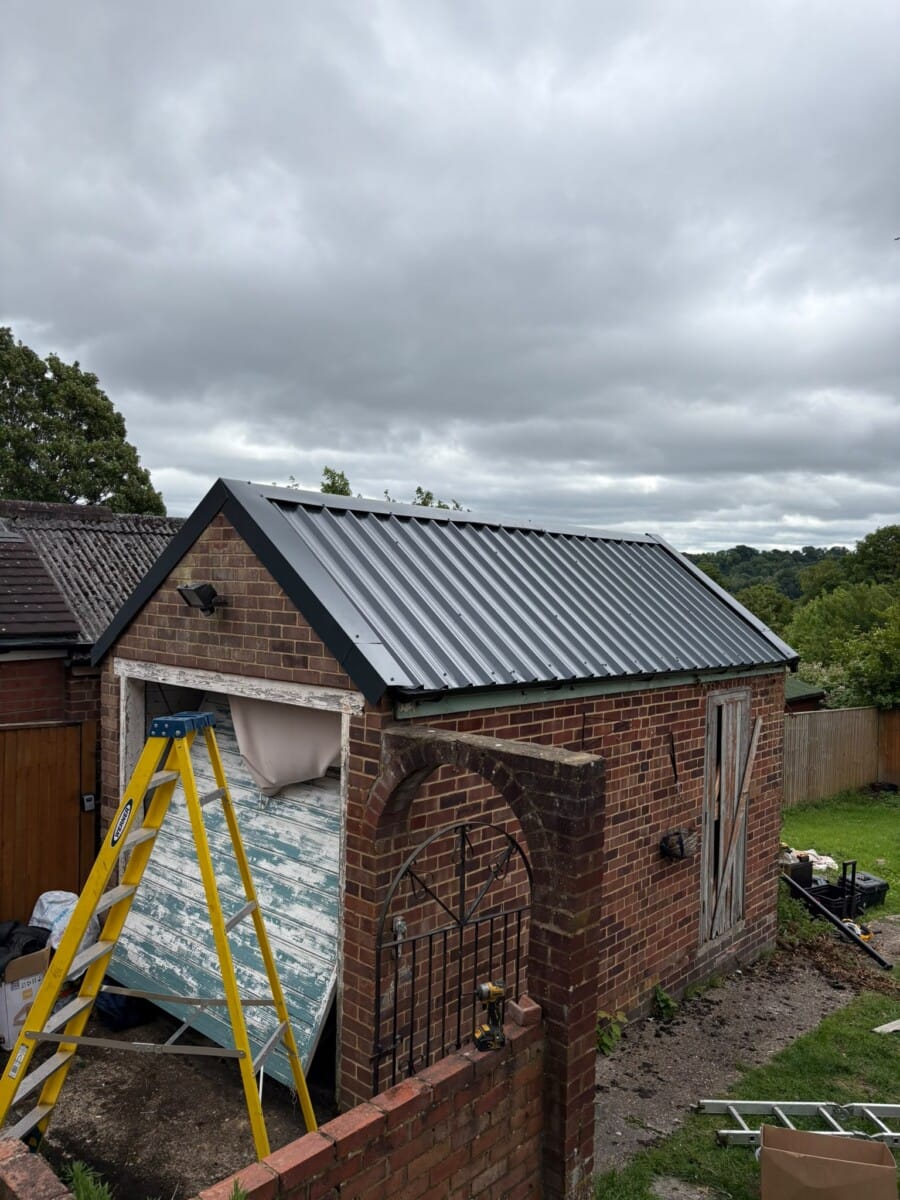
An asbestos garage roof replacement involves checking the existing garage, safely removing and disposing of the asbestos cement sheets, preparing the roof supports and installing a new weatherproof covering. Guttering and drainage also need attention, followed by cleaning, final checks and the waste paperwork.
At Excel Asbestos, we help homeowners understand what their garage needs before work begins. The condition of the frame, the roof design and access to the property all affect how the replacement is planned.
If you are wondering what happens on the day, this guide explains each stage, from the initial assessment to handing your garage back to you.
What checks are carried out before an asbestos garage roof is replaced?
The first step is to assess the garage and establish whether its existing structure is suitable for a replacement roof. A new covering needs secure supports, so the condition of the frame matters as much as the condition of the old sheets.
Depending on how your garage is built, the assessment should cover:
- The garage frame, walls and their connections, including visible movement or damage.
- Timber or steel roof supports, sometimes called purlins, for signs of rot, corrosion, sagging or loose connections.
- The roof dimensions, slope and arrangement of the existing sheets.
- Where the roof meets adjoining walls, neighbouring garages or other structures.
- Existing guttering, fascias, downpipes and the route rainwater takes away from the building.
- Access for the team, materials and removal of the old roofing.
We also need to establish what material is being removed. This article covers asbestos cement roofing. Other asbestos-containing materials, or sheets in a badly deteriorated condition, can require different working arrangements. Where the material is uncertain, identification or testing may be needed before work proceeds.
Before asbestos work begins, a suitable risk assessment and plan of work must address the specific job. This includes asbestos exposure, safe access, electrical hazards and the risk of falls.
If the assessment identifies repairs to the garage structure, these need to be discussed before the new roof is fitted. A roof replacement may allow you to retain a serviceable garage, but it cannot compensate for an unsafe frame.
How does the Excel Asbestos team safely remove the asbestos cement roof?
The removal stage is planned to minimise disturbance to the asbestos cement and keep the work area controlled. Anyone carrying out asbestos work needs the appropriate training and equipment for the task.
Access around the garage is restricted while removal takes place. Nearby surfaces are protected where needed, and the team uses suitable protective clothing and respiratory protection. Fixings are carefully released using methods that minimise disturbance to the sheets. Large sheets are lowered in a controlled way and handled with the aim of keeping them intact.
For you as the homeowner, the main requirement is to follow the team’s access instructions and keep children, pets and other people away from the working area. The removal and clean-up should remain with the team handling the asbestos.
The condition of the roof determines the precautions required. If unexpected damage or another suspect material is found, the working arrangements need to be reviewed before continuing.
What happens to the asbestos sheets after removal?
Removed sheets are carefully brought down and stacked in a controlled area as part of the removal process. They are then securely transported away after the job is complete.
The waste arrangements also cover contaminated cleaning materials and debris from the work. Removing the large sheets is only part of the job; smaller pieces and material around the old fixing points need attention too.
Once the old covering has been removed, the area is cleaned and the exposed supports can be checked more closely. Some parts of the roof structure are easier to inspect at this stage because they were previously hidden beneath the sheets.
Any repairs needed to provide a suitable base should be addressed before installation continues. The replacement sheets can then be prepared and arranged ready for fitting, with their layout checked against the garage dimensions and the position of the guttering.
This stage gives the team an opportunity to confirm how the new roof will sit on the existing building before it is secured in place.
How is the new garage roof installed and weatherproofed?
The installation method depends on the roofing system agreed for your garage. Excel offers both steel roofing and EPDM rubber roofing, so the construction details will vary with the material and roof design.
For a replacement using profiled steel sheets, the sheets are positioned across the roof with the required overlaps. These overlapping edges form part of the weatherproofing and help rainwater travel down the roof towards the guttering. The sheet layout, fixings and seals must suit the chosen roofing system.
Alignment is checked as the sheets are fitted. Their position affects both the finished appearance and how effectively water leaves the roof edge. Fixings need to secure the sheets to suitable supports, with the sealing components installed correctly.
Edges and junctions also need attention. Flashings are shaped finishing pieces used where the roofing meets an edge, wall or another part of the roof. The details required depend on whether the garage has a single slope, an apex or a connection to another building.
Overlap sizes and fixing arrangements should follow the requirements of the particular product being installed. There is no single set of dimensions that suits every roof.
For an EPDM replacement, the membrane and its edge details require a different installation method. The roof specification should therefore be clear before work starts, so you understand which system is being fitted to your garage.
What happens to the guttering, fascias and rainwater drainage?
The new roof needs to work with the garage’s rainwater system. During installation, our team makes sure the replacement sheets line up with the guttering so that water leaving the roof is directed into it.
Existing guttering may be retained where it is suitable. If it is damaged, poorly positioned or due for replacement, we can also replace or install guttering, fascias and rainwater pipework as part of the agreed work. Excel offers fascias and guttering alongside its garage roof replacement service.
Fascias are the boards along the roof edge where gutter brackets are often attached. Their condition matters because the guttering needs a secure fixing. The downpipe and discharge route also need consideration, so water can leave the gutter and flow towards the intended drainage point.
It helps to agree these details at the quotation stage. That way, you know whether your existing fittings will remain or whether new components are included in the replacement.
After installation, we carry out a water test to check for leaks and assess how water runs off the new roof. This helps us check the roof details and confirm that water is reaching the guttering as intended. Any issues identified during the test can then be addressed before handover.
The test forms part of checking the completed installation. Keeping gutters and outlets clear afterwards remains important for effective drainage.
How is the garage cleaned and checked before handover?
Cleaning takes place during the work and again as the replacement is completed.
Before handover, the work area is visually checked for remaining debris. This is an important part of checking that asbestos cement removal has been completed properly.
The completed roof also needs a final inspection. Our handover checks cover the fitted sheets and finishing details, the gutter alignment and the outcome of the water test. Tools, spare materials and installation rubbish are cleared from the working area.
We can then explain the work completed and any care advice relevant to the new roof. If you have questions about the drainage, roof finish or paperwork, handover is a useful opportunity to go through them with the team.
What paperwork should you receive after an asbestos roof replacement?
The key waste document is the Hazardous Waste Consignment Note, often shortened to HWCN. It records the movement of the asbestos waste, including its origin, a description of the waste, the carrier and the receiving facility. In England and Wales, contractors removing asbestos waste from domestic properties must use the relevant consignment arrangements.
Our team in the office will write up your HWCN the following day of the job, and you should receive a copy of the relevant waste documentation for your roof replacement in the post.
Keep this paperwork with your invoice and any written roof guarantee provided under your agreement. Together, these documents help you retain a record of what was replaced, who carried out the work and how the removed asbestos was managed.
The HWCN relates to the waste. It is separate from a roof guarantee or an asbestos survey, and it does not certify that every part of the garage or property is free from asbestos.
Before booking, ask what documents are included and when you can expect to receive them. Having this agreed in advance makes the handover clearer and helps you keep the relevant records together for future reference.
Speak to Excel Asbestos about your garage roof
If your garage has an ageing asbestos cement roof, we can help you understand the replacement options and what work your garage needs. We provide garage roof replacement services across England and Wales.
Contact Excel Asbestos to discuss your roof, including the condition of the frame, replacement materials and any guttering or fascia work you would like included. You can also call 0800 0996 558.
Frequently asked questions
Does replacing an asbestos garage roof mean replacing the whole garage?
No. If the walls, frame and roof supports are suitable, it may be possible to replace the roof covering while retaining the garage. The assessment needs to establish whether any structural repairs are required before the new roof can be installed.
How long does an asbestos garage roof replacement take?
Excel completes most garage roof replacements in one day. The time needed for your garage will depend on its size, access, roof design, weather and any repairs or additional work. The expected schedule should be discussed when your replacement is planned.
Do I need to empty my garage before the team arrives?
Ask the team how much space they need before the installation date. Moving vehicles and clearing access may be necessary, and belongings beneath the work area may need to be removed or protected. Leave the asbestos roofing and any suspect debris undisturbed.
Can I keep my existing guttering?
Yes, where it is in suitable condition and works with the replacement roof. Our team checks how the new sheets align with it. If changes are needed, replacement guttering, fascias or downpipes can be included in the agreed work.
How do you check whether the new roof leaks?
We inspect the completed roof and carry out a water test. This helps check the roof’s weatherproofing details and how water drains into the guttering. Any problems identified during these checks can be addressed before the job is handed over.
What does HWCN stand for?
HWCN stands for Hazardous Waste Consignment Note. It records the movement of hazardous waste, including asbestos roofing waste. Keep the relevant copy with your other roof replacement documents so you have a record of the waste arrangements for the work.